


to read: books
The Book of Three (The Chronicles of Prydain #1) — Lloyd Alexander — Such gems in here. Our young boys have also listened to a good chunk of this series. We are now heavy users of phrases such as Crunchings and Munchings and Whackings and Smackings.
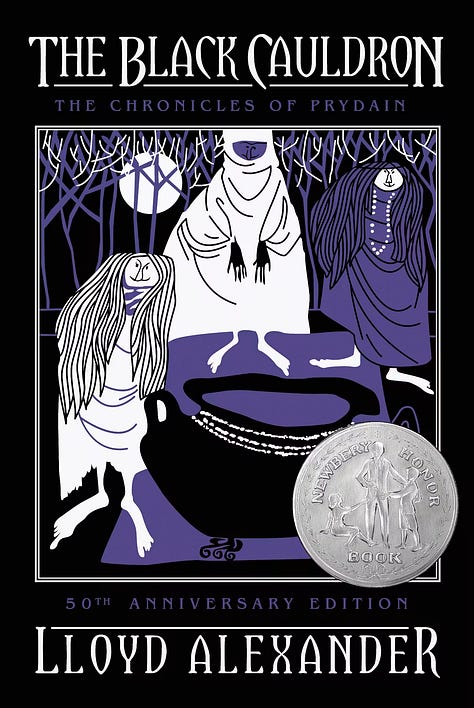
The Black Cauldron (The Chronicles of Prydain #2) — Lloyd Alexander — More gems.
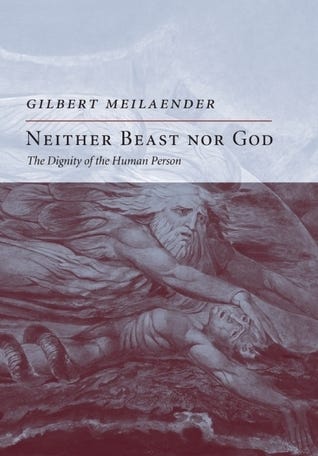
Neither Beast Nor God— Gilbert Meilaender — Recently, this old reflection on the book was reupped. I promptly went through the little book twice, saving many riches along the way.
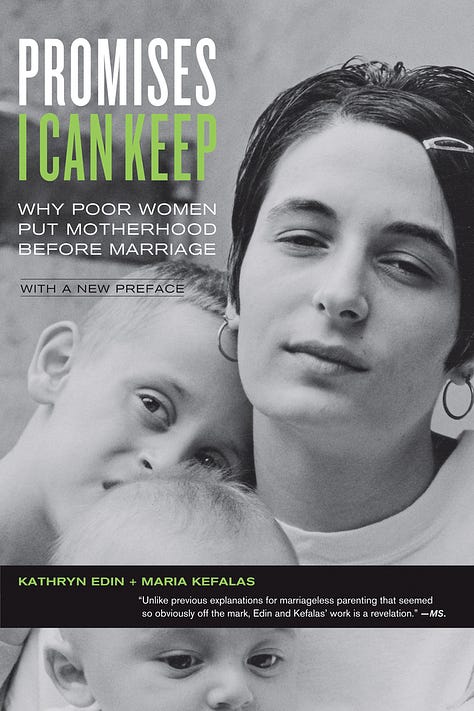
Promises I Can Keep — Kathryn J. Edin, Maria Kefalas — Quotes and some reflection here.
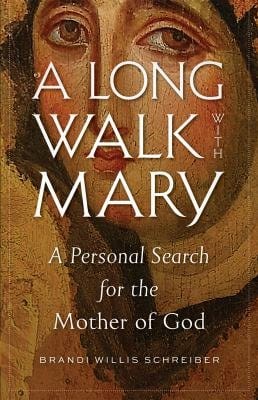
A Long Walk with Mary — Brandi Willis Schreiber — Exactly what it sounds like. This is not a theological tome, but a gentle exploration of Orthodox belief about Mary woven into Brandi’s own story. I enjoyed listening to her voice read it. One thing she brought up, which Schmemann mentions in For the Life of the World is that in Orthodox depictions of Mary, the Theotokos is ALWAYS with the Christ child in some way. In Western depictions, she is often portrayed without the Christ child, and makes frequent mention of her as the Virgin. This divergence in emphasis is utterly fascinating to me, perhaps illuminating of a few things, and last time I mentioned this I got some passionate clarification. Alas, I am only the messenger!
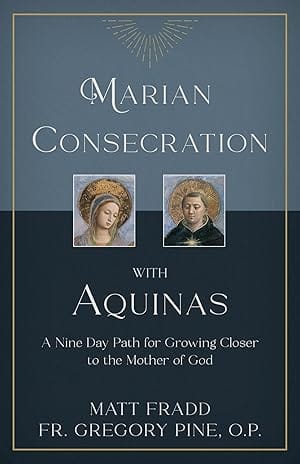
Marian Consecration with Aquinas — Matt Fradd and Fr. Gregory Pine O.P. — Blessed are who you can read outside your tradition and take what is helpful, not becoming threatened at points of disagreement, confusion, or divergence! Read widely! Mostly appreciated this for hearing what Aquinas had to say about Mary.



to read: essays and articles
on the body, sex, and procreation—in medicine, society, and our own lives:
What I Hope For My Body When I’m Old — Sarah Clarkson, From the Vicarage — “With skin so thinned by giving it’s grown translucent. Love burns through my mortality. I’m like Frodo after grief, a clear glass filled with light… I’ve feasted on Your body, placed as it is each time in my hands. With every taste I’m becoming less afraid. There is a door now, in the stone wall of death and light begins to spill along its edges.”
A vision of the body so thoroughly meaningful in all its crosses and glory.
Beyond ‘Sinfulness’ — Matthew Lee Anderson, The Path Before Us — “Moreover, it seems to me that the question of whether a practice is “sinful” or not truncates our aspirations to follow in the life of Christ. Consider alternative ways of thinking about enhancements: to what should the body bear witness? Is there a form of resistance to ‘worldly’ modes of bodily life that might be required in any particular community, even if the practice is not itself “sinful” itself and as such? What are the virtues that we are seeking to inscribe into the members of our bodies, and how might getting a facelift enhance or obscure them? To put the point differently, identifying what is “sinful” only sets the minimum threshold for the moral life. When Paul writes about the body in 1 Thessalonians, he reaches for the grammar of honor: “Possess your vessels,” he says, “in sanctification and honor.” There is much about the mortification of distorted desires in Paul’s thought, to be sure, but that trope is unintelligible without seeing how our bodies are directed through the Spirit toward their glorification in the eschaton. Thomas Chalmers’ memorable concept of the ‘expulsive power of a new affection’ resonates precisely because the only way we can, in the end, escape the reality of our sinfulness is through cultivating affections and desires for a life that positively bears witness to the kingdom of God.”
In other words, “Why should I trust or believe you?” is a valid question to be asked of Christians.
The Expulsive Power of Quitting Smut — Phylicia Masonheimer, Every Woman a Theologian — “Smut shapes your understanding of self, sex, men and marriage, but its greatest impact — and the deepest lie — has to do with your affections.”
She’s referencing Thomas Chalmers, quoted by Matt above. The mystery board map guy is coming out! Added here.

Pelvic Theology, Pelvic Justice — Carl Trueman, First Things — “Sex is not one human act among others but touches the heart of what it means to be human. The sexual constitution of the body is central to who we are, such that behavior involving such—whether criminal, consensual, or consequential—carries unique significance. To trivialize it, theologically or judicially, is to trivialize humanity itself.”
If only we could all unread the term “pelvic theology.” Unfortunately it was of high Life Considered interest.
Hospitality, Desecration, Politics: A Review of Carl Trueman’s ‘The Desecration of Man’ — Charles Carman, Mere Orthodoxy — “Our persons and our bodies have been reduced to objects. How we choose to live our lives, how we choose to treat our selves, what counts as our final end have all turned into an array of options and preferences provided by technological research and legal license. With an eye for these consequences, Trueman surveys such topics as sexual ethics, abortion, IVF, surrogacy, and man’s war against mortality. In every case, Trueman points out that if our souls and bodies are in fact sacred gifts given into our care by God, there are ways in which their treatment can only be described with the same language we would use for the act of burning down a church, violating the altar, or destroying a relic.”
Being a bit of a Trueman admirer myself, this was a riveting read. Perhaps one day, if the strength can be gathered, I’ll write more directly of how spiritually violating certain revelations of Christian culture have been for me.

Can We Humanize Our Brave New World? — Samantha N. Stephenson, Public Discourse — “From the seed of the imago Dei in the Hebrew Scriptures sprang the Christian philosophy of the radical equality of persons that forms the bedrock of our free society. As we revert to a pagan worship of idols—sex, money, and power—we need a revival of Christian ideals to humanize our burgeoning control over our own design. The elimination of suffering will not produce joy. If we seek to be truly free, we must acknowledge our responsibilities to one another.”
Samantha is writing a book in the vein of bioethics, which will surely be helpful.
IVF Creates Life, So It Must Be Pro-Life, Right? — Emma Waters, Rethinking Fertility — “It prompts us to ask, what happens when the pursuit of life leads to the destruction and loss of so much more?”
A warm substack welcome to Emma, who is also writing a book which readers of this newsletter will find valuable. She mentions the launch of the Anglican Bioethics Center, which I have added to the “organization” section here.
If RRM Is So Great, Why Have I Never Heard of It Before? — Merlot Fogarty, Natural Womanhood — “The real question is why our medical system has been so slow to embrace RRM. And the answer lies in the money, bureaucracy, and broader cultural failures that teach women that suppression and technological bypass are better options than truly understanding our own bodies.”
Added here. I’m not sure how unruly I will allow that compilation to get, or what needs to happen to it, but alas—attending to that corner of the house will have to wait.

The Inconvenient Gift — Leah | Blessed Endurance — “I thought I had been such a holy Christian in making all my holy Christian plans — for the good of others and the glory of God, of course — and here I was, blaming a baby for getting in the way of it. Resenting him for needing his mother to be patient with him. Resenting him for being in a difficult position in my womb. Resenting my own child for being given.”
Beauty Is the Apologetic — Shelby Arnette, The Bookshop Barista — “If we want to win our brothers and sisters in Christ to a life of bodily integrity we cannot share just the badness of the culture. This is an insufficient response… You cannot take up a cross when you are not anticipating beauty on the other side. Jesus, in taking up the cross of our salvation, in making us children of God, was motivated by the joy set before him.”
The Glory of Dad — Cameron Brooks, Conversant — “But we should not lose sight of the more fundamental reality: God’s children are his glory and joy. Grasp that for a spark of a second and your heart will sing forever.”
Added to the “Christian imagination in family planning” section here.

more resources:

![the [female] body: a compilation](https://substackcdn.com/image/fetch/$s_!wWgM!,w_140,h_140,c_fill,f_webp,q_auto:good,fl_progressive:steep,g_auto/https%3A%2F%2Fsubstack-post-media.s3.amazonaws.com%2Fpublic%2Fimages%2F4915e0a2-6b60-42c4-93c8-748af2fa1f4c_480x360.jpeg)

![the [desecrated] body: a compilation](https://substackcdn.com/image/fetch/$s_!dRya!,w_140,h_140,c_fill,f_webp,q_auto:good,fl_progressive:steep,g_auto/https%3A%2F%2Fsubstack-post-media.s3.amazonaws.com%2Fpublic%2Fimages%2F5c9d3ae9-c6b3-42ba-a5db-f5b7f91da982_555x600.jpeg)
to watch, listen to
The Glory of God and the Ethics of Reputation — Matthew Lee Anderson at Trinity Anglican Seminary — Here is a follow-up conversation on the lecture.
Admittedly, when he made mention of writing a book on the ethics of reputation, it did not (I’m so sorry) sound as jazzy or compelling compared to theological thinking and writing in the vein of, say, sexual and procreative ethics. And yet, yet, I listened to this - twice.
Though it is a wide and deep topic, with lots of corners and facets worth considering, there were profound connections to what I’ve personally been wrestling with. Of course, this spills over into writing. There is a reason I touch on both personal formation and Christian witness in here and here and here and here and here and here and, well, everywhere pervades my thinking on the topics at hand. This is because these matters are so deeply affecting in the day-to-day experience of faith and living alongside other Christians in the world. Ultimately, this newsletter exists because the body, sexuality, and procreation matter to our personal formation and Christian witness. But what’s more, those things are ultimately meant to be a means of showing off God’s astonishing glory.
Anyways, parts of the lecture illuminated why I wrote the essay below. But the whole thing was challenging. The language of reputation here will bolster your imagination and vocabulary.
“We glorify God by iconically manifesting the Son’s life through the Spirit, as we live as images of God. Our lives become permeable to his glory. At the same time, we bring honor to Jesus’ name when we call upon him and act under his authority… The fundamental problem, then, is not how Christians should think about our own reputations—important as they might be—but how we can become a people who iconically display God’s glory and are zealous for his name. Which is to say, that a Christian ethic of reputation depends on formation—that is, on catechesis.”
“Notorious [public] sin makes scandal a possibility. In dishonoring Jesus’ name, we make it harder for others to enter more deeply into God’s life, setting up a stumbling block, as it were, to their faith.”
“…conduct is only scandalous when it inclines our neighbor toward sin or disbelief. There is no scandal, in other words, if our conduct as Christians only offends moralizing scolds.” (I laughed)

Continuing On:
Mere Fidelity — Mere Orthodoxy — The Fall Before the Fall with Philip G. Porter — “…each and every physical reality in the world has a spiritual reality that is appointed over it, or has charge over it, an administrative or presidential role… the idea here is that God governs his creation not just by his immediate force of will and desires, but intermediaries.”
Woven Well — with Caitlin Estes — Episodes 148-150 — Five Ways to Boost Natural Fertility / Fertility Journey Transformation (Callie & Josiah's story) / Progesterone Resistance

In the Hills - Southwest Texas, Julian Onderdonk



I love seeing what you are reading. You always introduce me to something I haven't heard of before.
Such a great collection! Loved this quote: “The elimination of suffering will not produce joy. If we seek to be truly free, we must acknowledge our responsibilities to one another.” Somehow this is very hard to learn but I keep needing reminders - thank you!