


to read: books
The Unseen Realm — Michael S. Heiser — It was a lot. But hey, perhaps more on the profoundly dark realities we’re dealing with another time.
Sex & Virtue — John S. Grabowski — Thanks to Olivia Marstall for recommending this one from her days as a student. Finishing it up and there’s so much here. Perhaps some ideas will make it into writing. Why the chapters have like 65 footnotes on average is beyond me. And, while I’m not ready to say I endorse everything in here, reading this would certainly be worthwhile for a Christian of any tradition.
The Agony of Eros — Byung-Chul Han — Thoughts and quotes. Which inspired this post.
The Return of the King — J.R.R. Tolkien — My first journey there and back again is completed. Favorite quotes.


bonus
February’s newsletter also had this section, and I will periodically include it as the worthwhile books (blessedly) keep coming. Some friends of Life Considered have new ones I’d like to put on your radar. They are available for pre-order.


to read: essays and articles
on the body, sex, and procreation—in medicine, society, and our own lives:
Thomophobia — Mary Harrington, First Things — “It also seemed clear that there is a difference in kind between medicines that seek to bring someone closer to that “normal,” and biomedical interventions that set out to interrupt, co-opt, or otherwise reorder that “normal” for “the relief of man’s estate,” or simply to serve individual preference… Jesus could have made stone into bread, but he chose not to violate reality just to fill his belly. Instead, he made bread into his own body, to fill our hearts. If we want to survive this age of dissolution, we should take the hint. Share the bread, and attend to the Word.”
What a work of art.
She’s putting real Aristotelian Thomistic Meat™ on the bones of what I have only intuitively (“with my learner plates on”) explored in dimly lit ways, as with The Ideology of Machines or Why It Is Difficult to Talk About Ethics of the Body. The “metaphysical handicap” she describes presents (often unseen, unaddressed) implications for moral and spiritual formation in the Christian—an important part of the Life Considered project.
Meghan Safstrom Fisher shared a relevant, condensed explainer of Aristotle’s Causes: “We are a people severed from meaning, mystery, and telos — stripped of the very things that once formed us into whole and integrated persons. It was never meant to be this way.”
Is It Adultery? The Use of Third-Party Gametes in Assisted Reproductive Technology — Evan Lenow, Southwestern Journal of Theology — “Thus, the biggest hurdle to overcome in labeling third-party gamete donation as adultery is the fact that no sexual intercourse takes place.”
A brilliant exploration, peppered with beautiful realities to be reminded of. It tracks with the spirit of what I was trying to get at here. Our theological terms and concepts are no longer straightforward givens alongside the disintegrating approaches of modern medicine. Those terms and concepts can be warped (even made untrue) by what we choose to do to our sexual selves in particular.
Perhaps we do need extreme case studies such as this which force the question of whether fertility is a weighty part of sexuality, and thus our person. Perhaps we also need a book publishing moratorium until we address the elephant of… fertility’s theological and spiritual place in multiple areas.
Thanks to my husband sending my way, I went on to learn Lenow was recently elected president of the ERLC and co-wrote Ethics as Worship: The Pursuit of Moral Discipleship. He also quotes Dennis Hollinger and Gilbert Meilaender, whose work I’ve been wanting to become acquainted with. Fruitful rabbit trails abound!
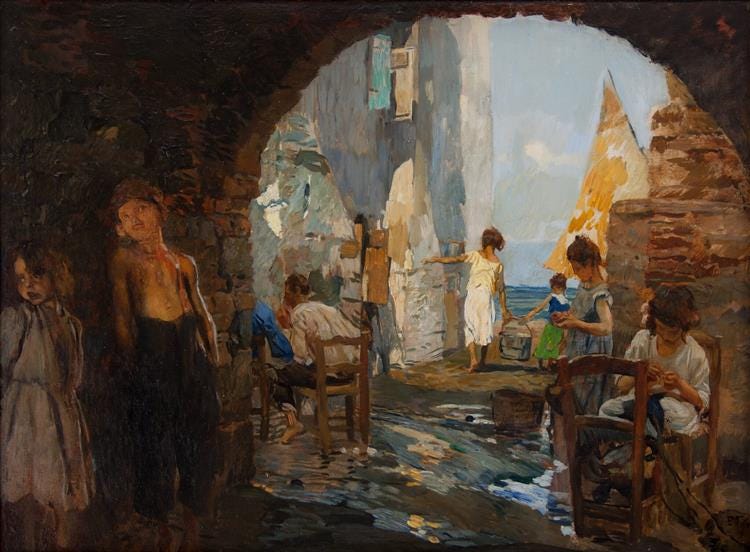
Designing Savior Babies — Katelyn Walls Shelton, Technically Human — “But when parents become designers rather than stewards, our orientation toward our children radically changes. We no longer see children as a God-given gift but as one choice among many, or as a means to the end of our own desires… when pastors don’t know how to counsel their members on these technologies, the primary conscience-shapers become their doctors, and the cathedral collapses into the exam room.”
Those in medicine have been standing in for pastoral, even priestly, roles. They have had great influence in tacitly filling formational gaps regarding sexuality, procreation, and the meaning of the body for longer than we care to admit.
IVF: In Defense of Personhood — Sharon Rhyne — “We have become a world that feels no horror at that which is horrific. Since that moment, I have learned to treasure my conscience. If you have the good sense to cringe, cry, or even vomit at something evil, praise the Lord… As I sat there, cold and shaking with pain, I thought of the woman who gave her eggs and money to make him. I thought of the Father who sold this child to a clinic… I thought, “This isn’t my job. I didn’t make this child. I didn’t abandon them. They weren’t originally my responsibility. Why must I suffer for them?” I was angry again because again I felt that God was playing a cruel joke. Everything about this moment was unfair. Not my mess, not my job, and somewhere a Mother who should be here, isn’t. I am, and I don’t like this kind of dying.”
May God have mercy on us.

A ‘Personless’ Purity Isn’t Pure At All — Chase Krug, Mere Orthodoxy — “Beyond failing to honor God’s design for sex and keeping the marriage bed undefiled (Heb 13:4), the effects of obscuring the person and reducing our spouses to their sexual value are regularly and predictably catastrophic... The sexual ethic you bring to the altar is the sexual ethic you bring to the marriage.”
First, is that sexual ethic we bring to the altar addressed in premarital counseling? Seminary? Our churches? Families? Where are people being formed here? Second, the discussion around lust inside marriage is needed, I think, though I wonder if it needs more granular language or examples? Or… nevermind. It seems hard to pin down. Most people tend to equate this as mostly a man’s issue. But we should acknowledge women are perfectly capable of “treating people we ought to love as objects for use” with the way women talk about their husbands and vasectomies, for instance. Women seem to get a pass on such objectifying language, and the heart and logic it flows from. It’s horrifying.
Admittedly, I have a difficult time with the phrase “God’s design for sex” after realizing the distressing extent of [gestures at the Life Considered archives] in modern Christianity. This has soured the integrity of many such discussions and discourse for me, and perhaps could sour the credibility of Christianity itself for some others.
Repentance and Forgiveness in a Pornified Age — Liana Graham & Scott Yenor, First Things — “The promise of marital trust is built on honest reckoning and generous forgiveness… Marriage in this environment is risky. But the alternative is suspicion and a degenerate stability—a future of gooners and OnlyFans models, of declining family formation and deepening mutual distrust. The path of Levin and Kitty, of Alice and Grey, remains open—but only for those willing to combine old wisdom with Christian mercy.”
Both added to this compilation.
The Other — Leah | Blessed Endurance —
"And loving you is mystery
it makes me more—
more like you and
more of me
How can it be
that your strength softened me?
Your walls let me breathe
You trellis me and I bear abundantly”
That brought tears. These good men are pure gift.

The Good Life and Our Shrinking Families — Liora Lee, Musings from the Hearth — “If we consider the fears that turn people away from children, we may see that the aversion to hardship could also be a spiritual formation issue… I’ve had to reckon with my own heart, which I’ve discovered is quite adept at dressing control as prudence, and covering my fear-driven decisions with theological frameworks.”
Arthur — Zach Monroe, Bright Lines — “She put her body through pain and suffering to protect his. All so we could hold him. So we could sing to him. So we could pray over him. If only for a moment.”
Respectively added to the “Christian imagination in family planning” and “miscarriage, child loss” sections in here.

more resources:

![the [female] body: a compilation](https://substackcdn.com/image/fetch/$s_!wWgM!,w_140,h_140,c_fill,f_webp,q_auto:good,fl_progressive:steep,g_auto/https%3A%2F%2Fsubstack-post-media.s3.amazonaws.com%2Fpublic%2Fimages%2F4915e0a2-6b60-42c4-93c8-748af2fa1f4c_480x360.jpeg)

![the [desecrated] body: a compilation](https://substackcdn.com/image/fetch/$s_!dRya!,w_140,h_140,c_fill,f_webp,q_auto:good,fl_progressive:steep,g_auto/https%3A%2F%2Fsubstack-post-media.s3.amazonaws.com%2Fpublic%2Fimages%2F5c9d3ae9-c6b3-42ba-a5db-f5b7f91da982_555x600.jpeg)
to watch, listen to
Continuing On:
Mere Fidelity — The Spirituality of Aliens and Delighting in the Ten Commandments — No quotes this time, but I truly appreciated the first one, as the idea of aliens connected in their conversation with what I’ve been thinking about—that is, the reality of dark spiritual beings, demons, principalities and powers as features of this world.
As for the 10 Commandments conversation, we are to meditate on God’s law as good, not thinking about it solely in the negative sense.
Woven Well Podcast with Caitlin Estes — Episodes 145-147 — Radically Different Approach to Infertility (Lindsey and Dan’s story) / Emotional Healing after IVF (Shiloh Ministry)
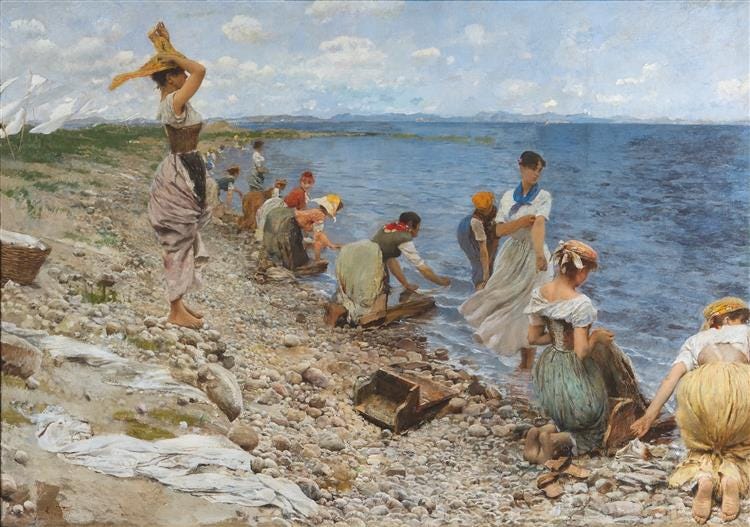


“ If we consider the fears that turn people away from children, we may see that the aversion to hardship could also be a spiritual formation issue…”
Oomph I have this issue… I am so grateful the Lord is giving me more opportunities to embrace the “hardship” and be grateful for the struggle which I know will become a great blessing to me soon, before I know it.
So many good ones this month, I always love Sharon and Leah.
That article on IVF was powerful.
And your quote from Return of the King! It's one of my favorites, Sam wrestling with ambition and vocation. So, so good.